Ground work
The part of the job you live with afterwards.
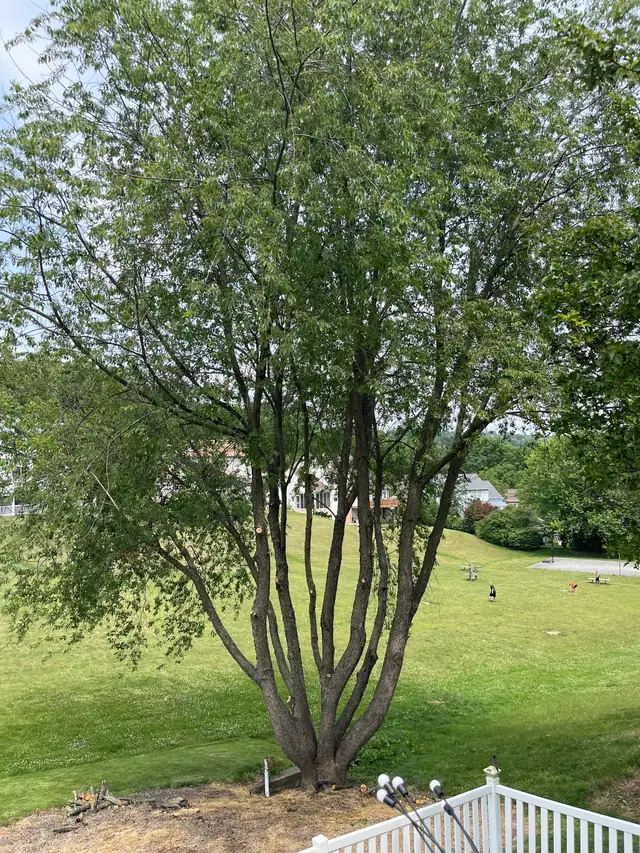
Ground out below grade, backfilled with its own grindings, and raked off so the grass closes over the hole instead of settling into it.
Why the stump is quoted separately
Taking a tree down and grinding its stump are two different machines and two different days, so they are priced separately and you can take either one. Most people take both, because a cut stump left in a lawn is a mower obstacle, a trip hazard, a place for suckers to come up on some species, and eventually a soft, sinking patch as the roots break down underneath. Ground out properly, the hole is filled back with the grindings themselves, tamped, and the lawn knits over it in a season.
What the machine actually needs
Access wide enough for the grinder to reach the stump, which is usually a side gate rather than a driveway, and a clear idea of what is buried in the area. Irrigation lines, invisible-fence wire, low-voltage lighting cable and septic lids all live at exactly the depth a grinder works at, so anything you know about gets marked before it starts. Grindings are a mix of wood and soil and are not the same thing as topsoil; if you plan to plant something new in the same spot rather than grass, say so and the hole gets treated differently.
Lesli Rhoads, on two large trees and their stumps: you would never know there were trees here.